

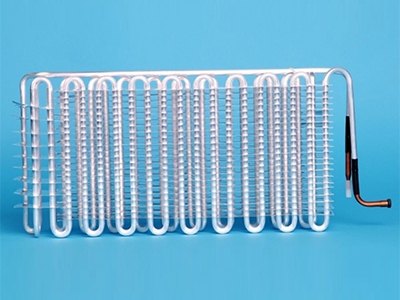
Dry Evaporators
In dry evaporators, the refrigerant flows inside the heat exchange tubes, while the chilled water circulates outside the high-efficiency heat exchange tubes. This structure has relatively lower heat transfer efficiency, with a heat transfer coefficient only about twice that of bare tubes. However, its advantages lie in oil return capability and expansion control.
Flooded Evaporators
In flooded evaporators, the refrigerant flows throughout the evaporator shell and directly contacts the water inside the shell for heat exchange. This structure offers higher heat transfer efficiency but requires a larger shell volume to accommodate sufficient refrigerant.
Falling Film Evaporators
In falling film evaporators, the refrigerant is evenly distributed from the top of the evaporator to each tube, forming a uniform liquid film for heat exchange. This structure features high heat transfer efficiency and effectively controls refrigerant flow rate and temperature.
Application Fields and Maintenance Methods of Finned Evaporators
Finned evaporators are widely used in refrigeration, air conditioning, and other industries:
Refrigeration: Used to convert liquid refrigerant into gas, absorbing indoor heat to achieve cooling.
Air Conditioning: Applied in air handling units to regulate indoor temperature by absorbing heat from the air.
To ensure the long-term stable operation of finned evaporators, regular maintenance is essential. Specific measures include:
1.Regular Inspection: Check whether fins and tubes are blocked or worn, and clean or replace them promptly if necessary.
2.Component Monitoring: Inspect the working status of refrigerant distributors and return pipes to ensure uniform refrigerant distribution and smooth recovery.
3.Pressure Testing: Conduct pressure tests to check the tightness of pipes and welded joints to avoid leaks.
4.Cleaning and Disinfection: Perform cleaning and disinfection to prevent bacterial growth and air pollution.
