

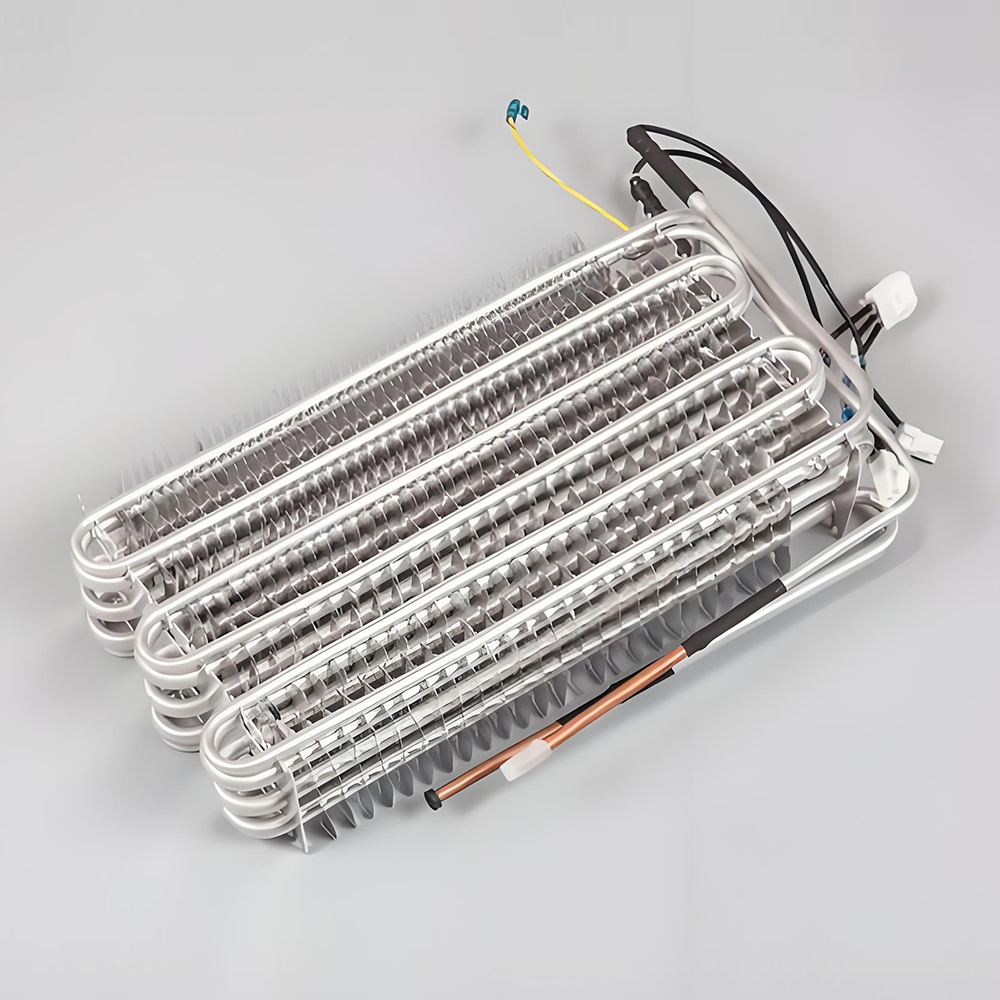
01 Analysis of Key Air Conditioning Components
Among the four core components of an air conditioning system, the evaporator and condenser hold an indispensable position, collectively accounting for half of the system's critical functionality. These two components not only significantly impact the air conditioner's performance but also serve as key factors for ensuring its stable operation.
Function of the Evaporator
As a core component of the air conditioning system, the evaporator plays a unique and vital role. It is responsible for absorbing heat to lower indoor temperatures, serving as a key element for the air conditioner's stable operation.
Function of the Condenser
Following the evaporator, we come to another key component of the air conditioning system: the condenser. Located at the rear of the evaporator, it acts as a heat dissipater to the outdoor environment. In the refrigeration cycle, the condenser exchanges heat with the external air, releasing the heat absorbed by the evaporator to achieve indoor cooling. This process not only ensures the cooling efficiency of the air conditioner but also creates a pleasant indoor environment.
02 Analysis of Condenser Fins
Next, we will delve into a critical component of the condenser: the fins.
Types and Functions of Fins
Fins are core components of the condenser, available in various types such as lanced fins, window fins, and corrugated fins. During the manufacturing process, the appropriate fin type is selected based on specific design requirements. Fins enhance convective heat transfer in the condenser; their slotted designs are intended to strengthen convection and thus improve heat transfer efficiency.
Production Process of Fins
The production process of fins is also ingenious. First, aluminum foil is stamped by a precision punch press, after which various types of fins are successfully formed. This stamping technology not only demonstrates technical sophistication but also ensures the precision and durability of the products.
03 Application of Aluminum Foil in Fin Manufacturing
Diversity of Aluminum Foil
The thickness of aluminum foil is a key factor affecting its cooling (or heating) capacity. Common thicknesses include 0.095mm, 0.1mm, and 0.105mm. Additionally, aluminum foil exhibits diversity in color, performance, and hardness:
Color: White, blue, and gold.
Performance: Common aluminum foil, pre-painted aluminum foil, anti-corrosion aluminum foil, etc.
Hardness: Grades such as H24 and H26.
The thickness and properties of aluminum foil directly influence the cooling (or heating) capacity, making it a critical factor in fin manufacturing.
