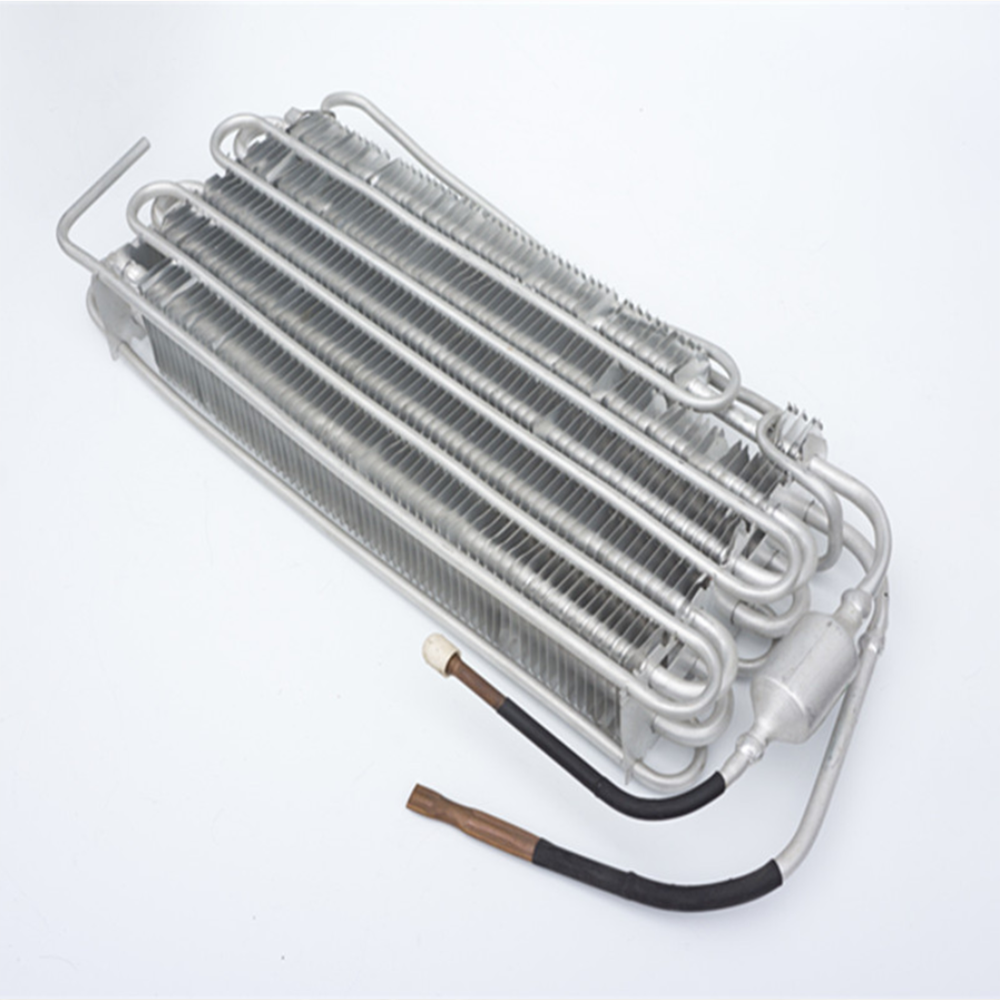
Fin density is not simply "the higher the better"; it requires balancing heat dissipation area and air flow resistance according to specific scenarios.
How Fin Density Affects Heat Dissipation
Increasing fin density can enhance the heat dissipation area, but excessively high density will increase air flow resistance, leading to uneven air distribution and even reducing heat dissipation efficiency. For example, in dusty environments, overly dense fins are prone to dust accumulation and difficult to clean, which will affect heat dissipation performance in the long run.
Relationship Between Fin Density and Heat Exchange Efficiency
When fin density is too high, the heat transfer coefficient will decrease (e.g., the heat transfer efficiency may drop below 0.5), and at the same time, the processing cost will increase. The reasonable range is usually: in industrial fields, the fin ratio (total heat transfer area / bare tube area) is recommended to be 5-12; in the air conditioning field, it can be relaxed to 15-22.
Balancing Strategies in Practical Applications
The appropriate density should be selected according to the equipment's operating environment and working condition requirements. For example, in dusty scenarios, medium density is recommended, while in clean environments, the density can be appropriately increased to improve heat dissipation efficiency. Meanwhile, factors such as fin material and craftsmanship should be considered for overall performance.